Internet history
The oldest memes on the internet
Year by year, from before the web to the Rickroll: where each one started, who made it, and the sources.
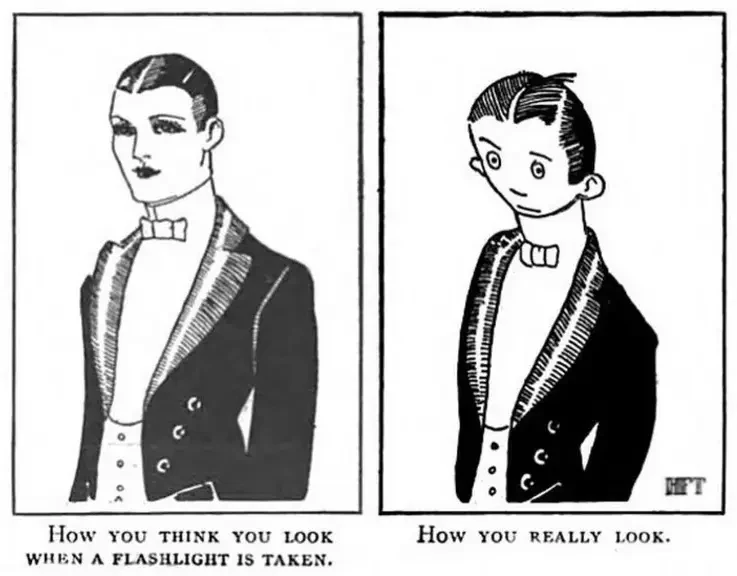
Nobody agrees on one first meme. The oldest one people usually name is a 1921 college humour magazine cartoon: “how you think you look” beside how you really look. Online, the typed smiley :-) came first, in 1982, and the one usually called the first to go viral is the Dancing Baby, which travelled the world by email in 1996.
Before the internet
Jokes that copied themselves long before anyone was online.
- 1921
The 1921 “first meme” cartoon
A two-panel cartoon from May 1921, “how you think you look” beside how you really look, went viral in 2018 as “the first meme”.
 Read more →
- 1945
Kilroy was here
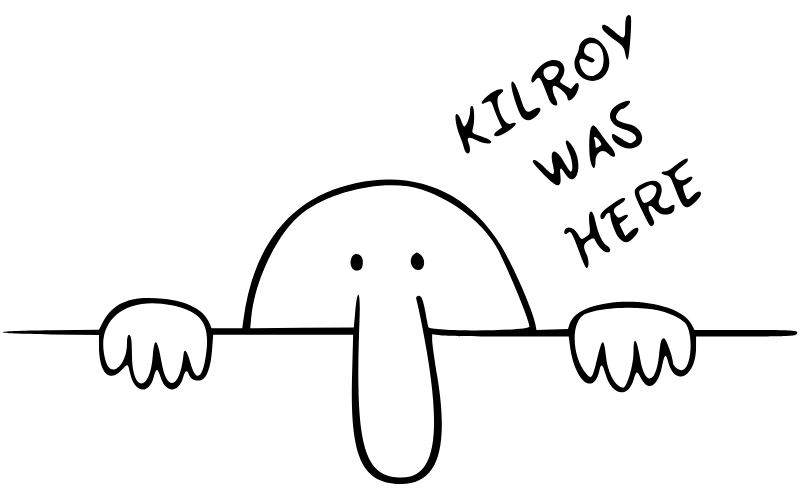
A doodle of a long-nosed face peeking over a wall, signed “Kilroy was here”, that soldiers left on walls and equipment around the world in the 1940s.
 Read more →
Message boards and Usenet
Text on university networks and the first newsgroups, 1982 to 1995.
- 1982
The first smiley :-)
Scott Fahlman suggested :-) to mark jokes on a Carnegie Mellon message board in 1982, and within months it had spread across the network.
Read more → - 1990
Godwin’s law
Mike Godwin’s 1990 rule: the longer an online argument runs, the likelier someone compares someone to Hitler. He spread it on purpose.
Read more → - 1990
The Exploding Whale
Oregon road workers blew up a dead whale with dynamite in 1970; after a 1990 newspaper column was copied onto bulletin boards, the clip spread.
Read more → - 1993
Spam
Early net users borrowed spam from a 1970 Monty Python sketch to mock message floods, and after a 1994 Usenet advert it became everyone’s word.
Read more →
The early web
Animated GIFs, home pages and chain emails, 1996 to 1999.
- 1996
The Dancing Baby
A 3D baby doing the cha-cha, made as a sample file for animation software in 1996, spread by email and danced onto TV’s Ally McBeal.
Read more → - 1996
Bert is Evil
Dino Ignacio’s joke site of doctored photos “proving” Sesame Street’s Bert was evil won a 1998 Webby and spread through dozens of mirror sites.
Read more → - 1996
Mr. T Ate My Balls
A University of Illinois student’s joke page about Mr. T was copied hundreds of times, for other celebrities, across the late-1990s web.
Read more → - 1998
The Hampster Dance
Deidre LaCarte’s GeoCities page of dancing hamster GIFs, looping a sped-up song from Disney’s Robin Hood, sat unvisited until email made it explode.
Read more → - 1999
The Dancing Banana
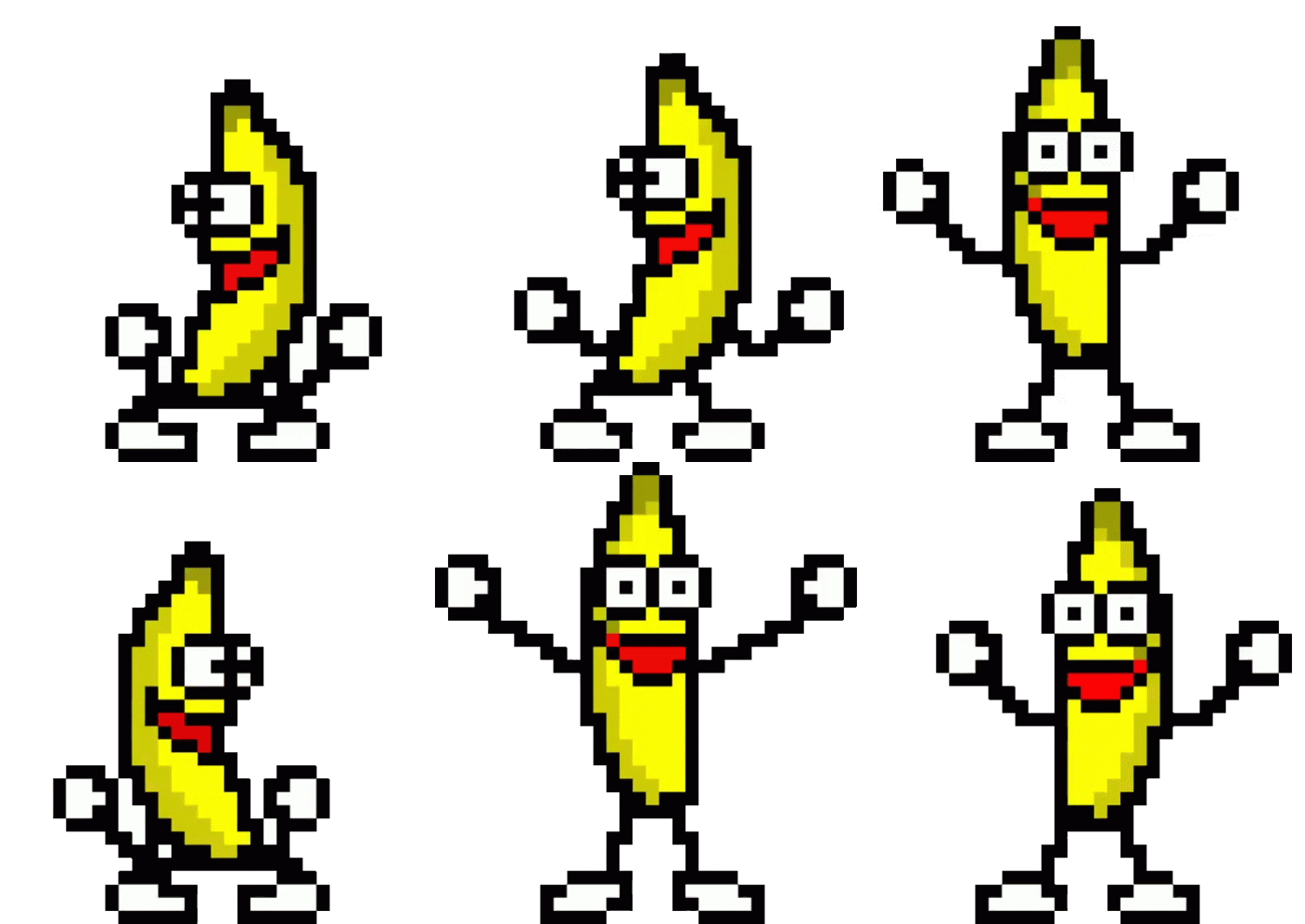
Trym Stene animated a pixel banana as a celebration emoticon for web forums; years later a Flash video set it to Peanut Butter Jelly Time.
 On this site →
- 1999
Mahir: “I kiss you!”
Mahir Çağrı’s cheerful home page in broken English, signed off “I kiss you!”, was forwarded by email in late 1999 and drew 700,000 visitors in a week.
Read more → - 1999
All your base are belong to us
A garbled line from the 1991 English version of the game Zero Wing went around gaming sites as a GIF, then a February 2001 Flash video made it global.
Read more →
The Flash years
Looping cartoons and the first viral videos, 2000 to 2004.
- 2002
Peanut Butter Jelly Time
A Flash cartoon set the dancing banana to The Buckwheat Boyz’ song; it spread across Flash sites and reached NBC’s Ed in 2002.
On this site → - 2003
Star Wars Kid
A Quebec teenager’s private video of himself swinging a golf-ball retriever like a lightsaber was shared by classmates in 2003 and spread worldwide.
Read more → - 2003
O RLY?
A photo of a snowy owl captioned O RLY?, oh really, became a sarcastic reply on forums from 2003, and one of the first reaction pictures people knew.
Read more → - 2003
Badger Badger Badger
Jonti Picking’s Flash loop of exercising badgers, a mushroom and a snake, chanted over a dance beat, went around the web by email and forums.
Read more → - 2004
Numa Numa
Gary Brolsma filmed himself on his webcam, lip-syncing joyfully in his chair to O-Zone’s Dragostea din tei, and the clip spread from Newgrounds.
Read more →
Video and captioned pictures
Clips, captioned pictures and jokes anyone could add to, 2005 to 2007.
- 2005
Chuck Norris facts
Made-up, wildly exaggerated facts about Chuck Norris’s toughness, from Ian Spector’s 2005 fact generator, copied and emailed around the world.
Read more → - 2005
Leeroy Jenkins
In a 2005 World of Warcraft video, a player shouts his own name and charges in alone, wrecking his group’s plan; it went from gaming sites to TV.
Read more → - 2007
LOLcats and I Can Has Cheezburger?
Cat photos with misspelled captions spread on 4chan from about 2005; the blog I Can Has Cheezburger?, started in January 2007, took them mainstream.
Read more → - 2007
The Rickroll
A prank link that promises something else and plays Rick Astley’s 1987 Never Gonna Give You Up instead; it began on 4chan in 2007 and peaked in 2008.
Read more → - 2007
Dramatic Chipmunk
A five-second clip from Japanese TV of a prairie dog whipping its head round to a dramatic music sting spread on YouTube and CollegeHumor in 2007.
Read more →
Where the word comes from
The word meme is older than the internet. The biologist Richard Dawkins made it up in his 1976 book The Selfish Gene, for an idea that copies itself from one mind to the next the way a gene copies itself from one body to the next.
This timeline as data: JSON or CSV, free to reuse with credit (CC BY 4.0).
Questions
About the oldest memes
What was the first meme ever?
Nobody agrees on one. The oldest usually named is a cartoon from May 1921 in the Wisconsin Octopus, a college humour magazine, though the BBC found the same joke in a 1919 or 1920 issue. Online, the typed smiley :-) came first, in 1982, and the Dancing Baby of 1996 is the one usually called the first to go viral.
What is the oldest meme on the internet?
The typed smiley :-), which Scott Fahlman suggested on a Carnegie Mellon University message board on 19 September 1982 to mark a joke. Godwin’s law followed on Usenet in 1990.
Where does the word meme come from?
From the biologist Richard Dawkins, in his 1976 book The Selfish Gene. He shortened the Greek mimeme, a thing imitated, so it would sound like gene.
Was the 1921 meme printed in a University of Iowa magazine?
No. It was first printed in the Wisconsin Octopus, the University of Wisconsin’s humour magazine, in May 1921, and Judge magazine reprinted it later that year. Many pages repeat the Iowa mix-up.
Is the dancing banana one of the oldest memes?
Yes. Trym Stene animated the Dancing Banana in 1999 as a celebration emoticon for web forums, years before a Flash video set it to Peanut Butter Jelly Time.